Your Thursdays just got more social… Check Out Third Thursdays at the Riverwalk.

learn more
The Making of a Snow Sculpture

Blog

The Making of a Snow Sculpture

An Artist’s Perspective

This year marks the 35th annual International Snow Sculpture Championships (ISSC) in Breckenridge, Colorado. Since 1991, teams from around the world have descended upon Breckenridge to hand-carve magnificent, ephemeral snow sculptures. The event celebrates the town’s deep commitment to art and snow culture. 

Read on to discover what makes this iconic Breckenridge winter festival so special. Plus, get a behind-the-scenes look at the commitment and skill necessary to compete from one of the festival’s talented sculptors.

International Snow Sculpture Championships

Event Schedule

  • Saturday, January 24 - Tuesday, February 3, 2026

  • Sculpting Week: 9 a.m. Saturday, January 24th – 9 a.m. Wednesday, January 28th

  • Viewing Week: 9 a.m. Wednesday, January 28th,  – 5 p.m. Tuesday, February 3, 2026

Area surrounding the Riverwalk Center, Downtown Breckenridge
Please note, while the event is free and open to the public, there is no parking at the event site.

838a2167
snow sculptures 2020 credit elaine collins (10)
snow sculptures 2020 credit elaine collins (16)

What Is the ISSC?

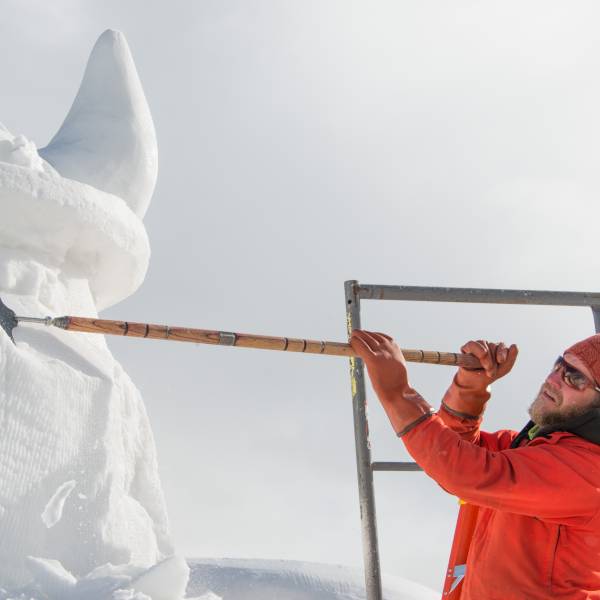
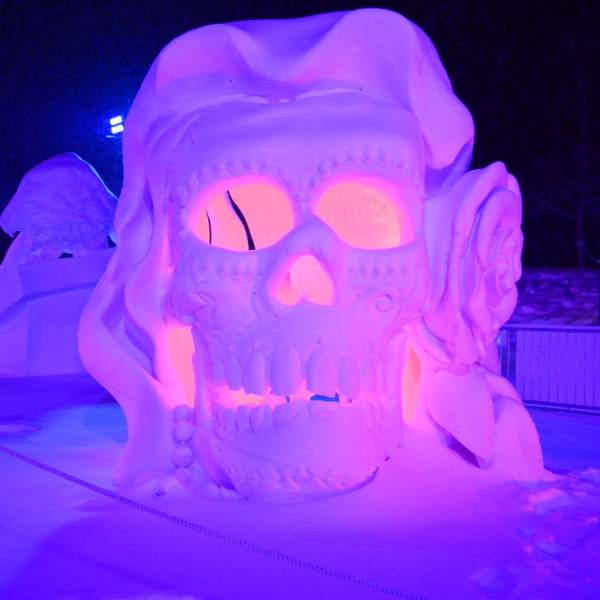
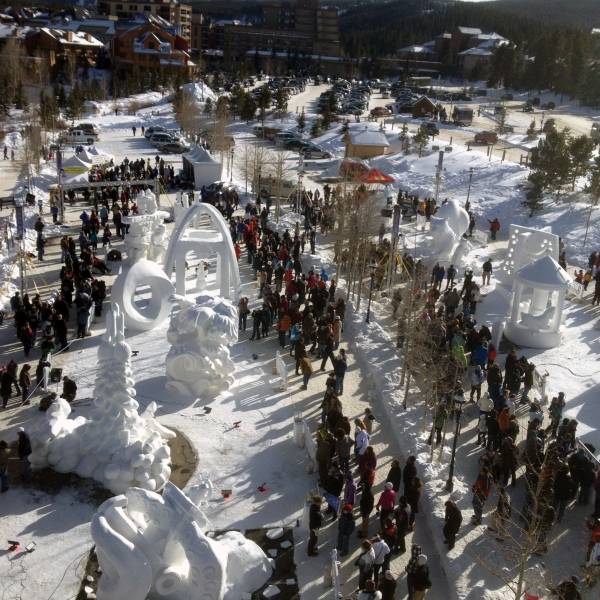
The ISSC is an internationally acclaimed snow sculpting competition held annually in Breckenridge. Sixteen teams from around the world are hand-selected from dozens of submissions to compete. Following a ceremonial cannon-shot start, teams have four full days and nights to carve 25-ton blocks of snow into monumental masterpieces using only hand tools; power tools are strictly forbidden. 

“It takes six months to a year for a bronze sculpture that size to be completed,” says Ron Shelton, ISSC co-founder and former snow sculptor. “A snow sculpture is completed in just four days.”

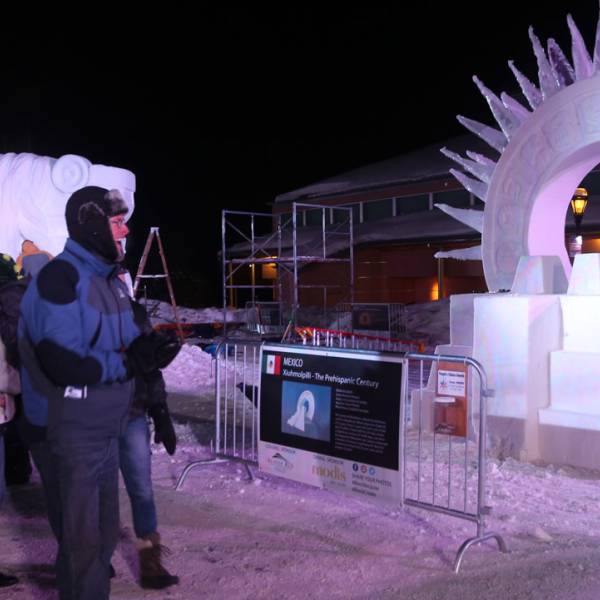
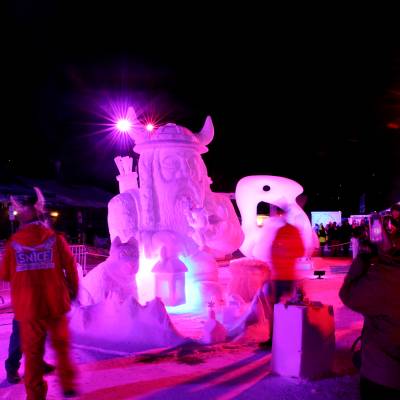
The sculpture site sits in the heart of downtown Breckenridge, in the parking lot adjacent to the Riverwalk Center. This central location allows passersby to walk through the site daily and observe these Herculean sculptures emerge in real time. Once complete, the sculptures remain on display for a few days before the town’s street crew bulldozes them away. 

“The only thing left is the pictures,” Shelton says. “One of the cool things about the competition is that it accentuates the fact that nothing lasts forever…it underscores the dynamic of life.”

The ISSC is made possible through a remarkable collective effort. Breckenridge Ski Resort provides the snow. Local merchants donate food and lodging for the teams. The Town of Breckenridge and community organizations support the event in countless ways. Volunteers fill critical roles, from stomping down the mammoth snow blocks to delivering meals and hot drinks, allowing sculptors to focus entirely on their work. 

Breckenridge’s Snow Sculpting History

Breckenridge’s history with the ISSC dates back to the late 1980s. Shelton and ISSC co-founders Rob Neyland, Randy Amys, and Bill Hazell wanted to participate in Ullr Fest and flipped a coin to decide whether to build a parade float or carve a snow sculpture. 

Their sculpting talent quickly drew attention, and a passerby encouraged them to compete nationally. Just a few years later, while attending an international competition in Finland, the idea struck: with its unrivaled snow quality, Team Breckenridge should host the international championships. Afterall, they already had experience hosting state and national championships. With a bit of networking, the vision became reality, and in 1991, Breckenridge became home to the ISSC.

At the time, Breckenridge had yet to gain worldwide recognition as a premier ski destination. Shelton and his teammates were eager to change that. The town’s high elevation and cold temperatures produce exceptionally dry, light snow—ideal for winter sports and, by extension, snow sculpting. With snow produced to exact specifications and wholehearted community support, the competition quickly became a cherished stop on the international circuit. 


“The goal was getting impressions for Breckenridge,” Shelton says. “Lo and behold, after 20 years or so Breck became a little more widely known…Willard Scott (of NBC’s Today show) even came out to forecast the weather for an event.”

838a2201
team wisconsin
img 0414a

Judging Criteria 

A panel of five judges evaluates each team across four categories: technical skill, creativity, expressive impact, and adherence to the original submission. They consider originality, visual rhythm and balance and the clarity of the sculpture’s message.

While teams compete for gold, bronze, or silver medals—along with artists’ and people’s choice awards—there is no prize money. 

“The running joke is that teams travel halfway around the world to compete for a ribbon,” Shelton says. “There’s no prize money, no trips to Disneyland®—this is purely for the ten-dollar medal.”

ISSC 2026 Teams

This year’s competitors hail from South America, all over Europe, Asia, and North America. 

2026 Teams

• Argentina

• Germany

• Finland

• Italy

• Lithuania

• Malta

• Mongolia

• South Korea

• Ukraine

• Breckenridge

• Vermont

Meet a Snow Sculptor

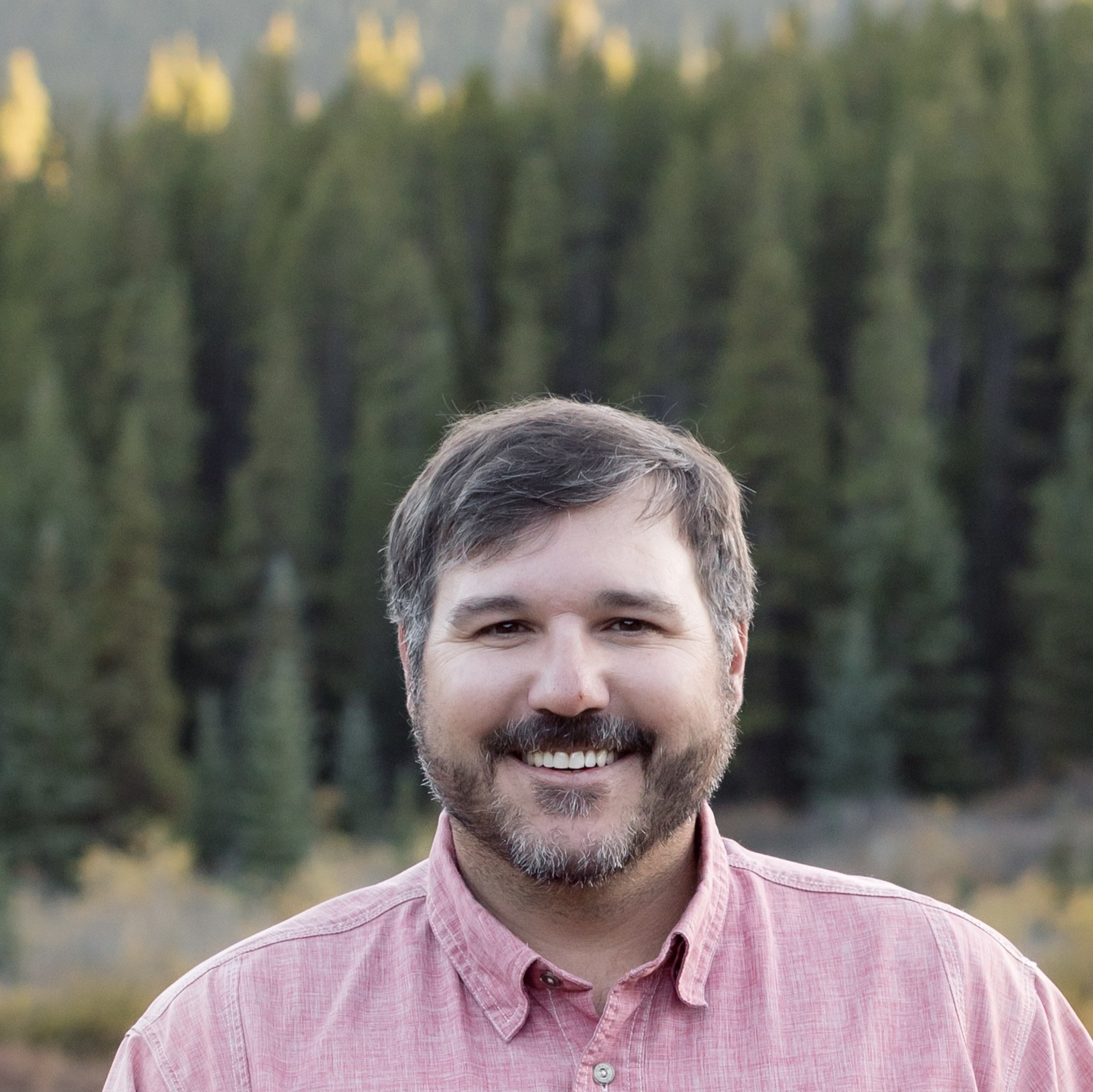
Tim West

Member of Team Breckenridge U.S.A. Snow Sculpting Team + Owner of Breckenridge Outfitters

Tim West has been a member of Team Breckenridge for 16 years. Below, he shares insights into the physical and creative demands of international snow sculpting—from planning and collaboration to weather challenges and working with an ever-changing medium. He also reflects on the camaraderie among teams and the community support that makes the event possible. 

Q: Hi Tim, thanks so much for sharing your experience with us. What is your personal history with snow sculpting?

A: I’m originally from Edmond, Oklahoma, and when I moved to Breckenridge more than 20 years ago, the snow sculpting event was always a highlight. It’s so uniquely Breckenridge. The entire community unites to support the event—food and lodging is donated, and teams are paired with a community liaison to ensure their needs are met.

Before joining the team, I participated in the Snowflake Challenge, a local snow sculpting event. My team came in second place two years in a row, and in 2010, two of us were recruited to Team Breckenridge. 

Q: Why did you want to be a part of this team and event?

A: I wanted to be a part of something deeply community-focused. Representing my hometown and country on a world stage is very meaningful. The intensity of creating something so massive in extreme conditions builds real camaraderie. We share meals, exchange team gifts, and celebrate together when it’s over. It’s incredible. 

Every year, I’m blown away watching teams push the boundaries of what I thought was possible. 

Q: Do you have a background in sculpting or any visual arts?

A: My background is actually in the performing arts…I’ve been acting and singing since I was four or five. Here in Breckenridge, I’ve directed children’s theater and produced multiple shows with the Breckenridge Backstage Theatre. 

Q: Here at Breck Create, we believe that anyone can be an artist. To what do you attribute your success?

A: A lot of trial and error! Over time, I’ve learned new techniques, and one of the most beautiful aspects of this competition is how teams share knowledge to ensure success. Language barriers exist, but the hands-on instruction transcends that.

Our team captain, Keith Martin, has also taught me a tremendous amount. (Keith created his first ice sculpture more than 20 years ago in culinary school and now sculpts professionally for resorts and brand activations.)    

Q: How big a commitment is being on the team?

A: The ISSC is a heavy lift. Days are long and often turn into all-nighters. Weather impacts everything—warm conditions bring slush; cold brings ice. Last year, temperatures dropped to -21 degrees. Snow density changes as you carve deeper, requiring constant adjustment. You learn to stay flexible.

Q: Walk us through the life cycle of a snow sculpture, from conception to execution.

A: Ideas start forming during the competition itself. By summer, they evolve into full concepts. Using CAD drawings and sketches, we build scale models (called maquettes) to test feasibility. Something like an extended arm can weigh hundreds of pounds, and again I tip my hat to Keith for his structural engineering abilities.

During the event, Team Breckenridge typically meets early for breakfast and planning, reassesses at lunch, and sets milestones throughout the day. All-nighters are more common than I’d like. 

By the final day of sculpting week, sculptors are exhausted and running on adrenaline; they need surgical focus to cross the finish line. Seeing the work evolve day by day really highlights both the artistry and athleticism involved.

Q: What tools do snow sculptors use? 

A: Every team designs custom tools. The one universal tool is the rope saw, made from rope, PVC-coated wire, or grommet-threaded cable. A rope saw is used to make large cuts, which require at least two people and serious physical exertion—like rowing for hours. Teams also repurpose everyday items, including cheese graters.

Q: Does Team Breckenridge have a signature style?

A: We’re known for playful sculptures, but the throughline is embracing new challenges. One year, instead of carving away the block, we hollowed it out to create Underwater, featuring a shark and deep-sea diver. 

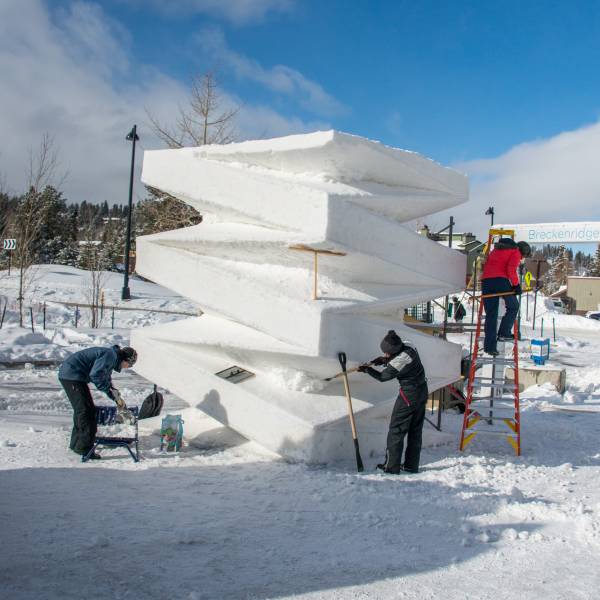
Sculptures range from abstract to lifelike. Last year’s piece, Peak Performance, shifted perspective depending on where you stood, from a skier descending a chute to a pyramid that looked ready to topple.

Q: How would you describe the ISSC for someone who has never attended?

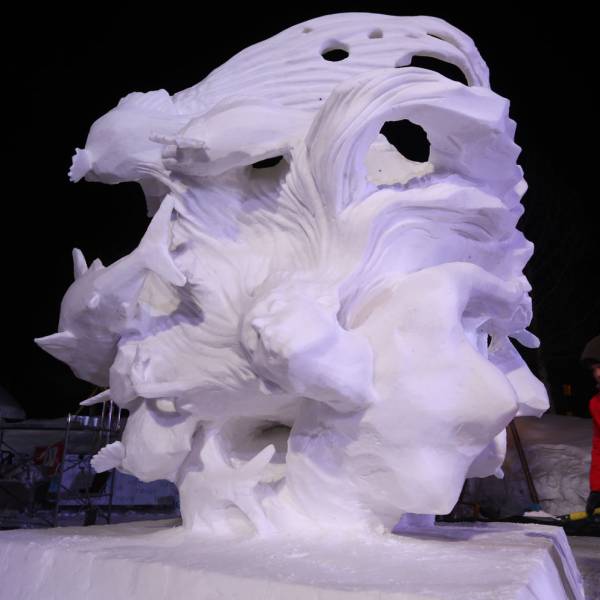
A: During sculpting week, you’ll witness the transformation of a 25-ton block of snow into art. Details emerge daily, and the sheer volume of snow removed is astonishing. Progress isn’t always what it seems—slower-looking teams may be making the most strategic advances.  

You’ll see sculptors engulfed by the blocks, hollowing out portions of the work, and the intricacy of the detailed work is mind-boggling. 

Q: Any tips for viewing the sculptures?

A: I love listening to the kids—they see everything with pure wonder. At the end, I try to blend into the crowd to experience it from their perspective.

Pay attention to the weight being suspended, the balance, and how light and shadow change the sculpture. Look at the negative space—it’s just as important as what remains.  

Q: Anything else we should know?

A: The final night of sculpting week is incredible—the entire community comes out to support the final push, and it feels like a carnival. The awards ceremony has an Olympic-style “Parade of Flags,” complete with national anthems. 
I’m incredibly honored to be part of this event in my hometown. There’s no better time to experience Breckenridge.

- Tim West

Pro Tips

• Dress yourself—and your dog—warmly. ISSC is pet-friendly (dogs must be leashed), but expect cannons, light shows, and crowds.

• Visit during Sculpting Week for fewer crowds, to watch the artists at work, and see the magic unfold.

• Attend the final night of Sculpting Week to cheer on the sculptors alongside the community.

• During Viewing Week, visit both daytime and after dark for the Evening Grand Illumination LED light installation (4:30 p.m – 10 p.m. nightly through February 2).

• Carpool, rideshare, and use shuttle buses when possible.

• Park for free at the Free Skier Shuttle Lot

• Download the Breck Free Ride App for free public transit (dogs welcome).

• Follow ISSC on Facebook + Instagram and search #breckissc.

250111 campus crawl kusumoto 008

Plan Your Visit

Breck Create, as operator of the Riverwalk Center for the Town of Breckenridge, is a proud ISSC community partner. Learn more and plan your visit by exploring the ISSC info page created by the Breckenridge Tourism Office.